
In case you missed the intro last month, I wanted to try to share something new so I started a new section — a monthly showcase I’m calling “The Quick Catch.” This is just a humble attempt to share a little basic information about a fish in the hobby that I really enjoy. I’ll be drawing from my own experiences with these fish and sharing what I’ve learned (and still remember) along the way. I hope this information will be useful to you, and perhaps inspire you to learn more about these amazing creatures than just what I share. With most submissions I will share a QR code which will take you to a video I have also created. I welcome your feedback and thoughts, experiences and ideas, and look forward to seeing where this journey takes us. So, let’s give it a shot!
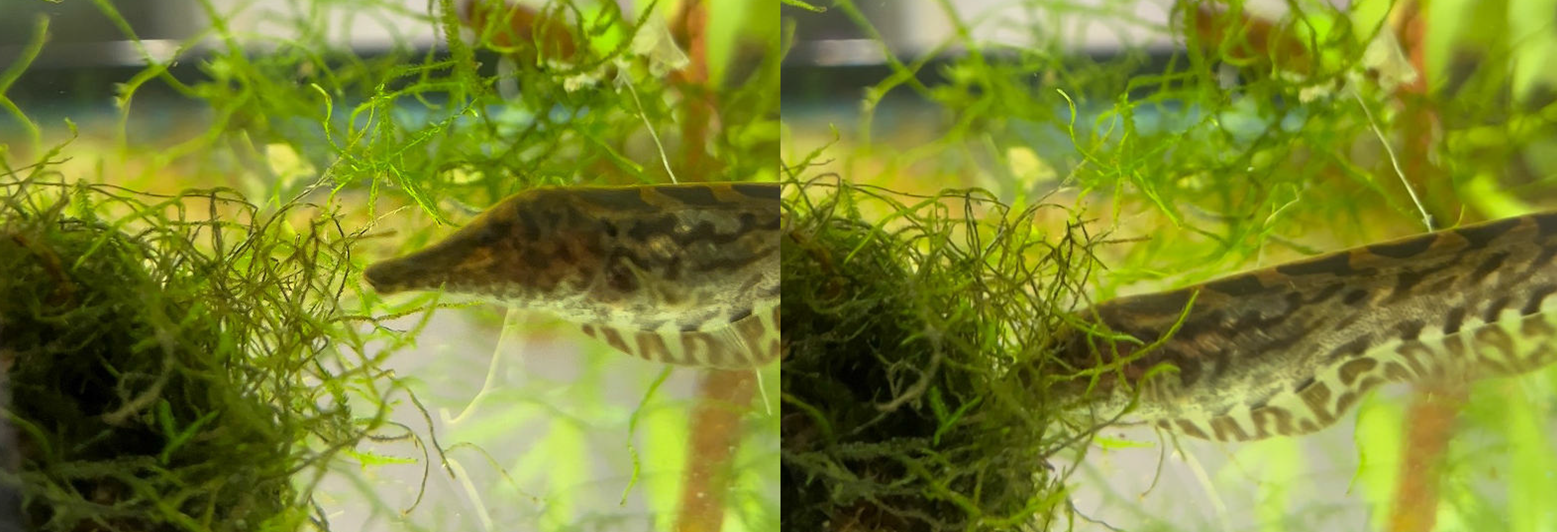
A Trumpet Knifefish digging through some java moss with its elongated “snout.”
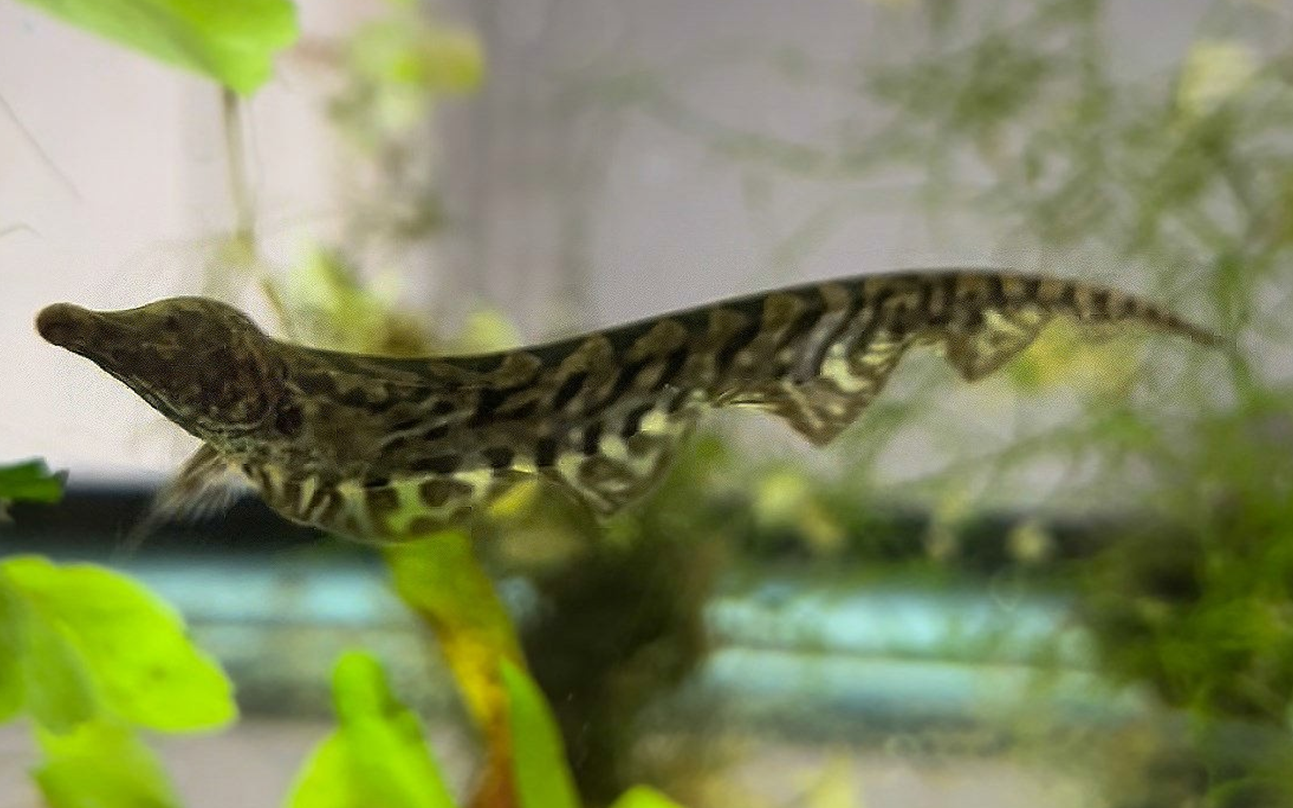
The Trumpet Knifefish, Rhamphichthys rostratus. It is also known as The Ossa Knifefish and it is a fascinating species of fish native to South America.
While they are typically exported from Colombia, they actually have a wide distribution throughout the continent. This fish is named after its unusually shaped trumpet-like snout, which it uses to search and root out worms, small crustaceans, and insect larvae, which it locates using its electrical discharge ability. In captivity, they will typically accept live black worms and tubifex and frozen foods such as blood worms, brine shrimp, and mysis shrimp. However, in my experience they are a picky fish and are very shy, being easily outcompeted for food by more aggressive fish in the aquarium. It’s essential to provide them with an adequately sized aquarium and plenty of hiding spots to make them feel secure.
These fish are peaceful and can be kept in groups. They commonly lay on top of each other in large groups on the ground among leaf litter or in soft sand beds. Like I mentioned before, they have a unique ability to generate and receive electrical discharges, which they use for navigation, communication, and locating their prey. Because of this, they do not always do well with other types of electrical discharging fish such as other knifefish and mormyrids such as elephant nose fish.
While some of the knifefish can reach sizes of up to 40 inches (100 cm) in the wild, I have yet to see any Trumpet Knifefish larger than 28 inches in an aquarium myself, but keep in mind that these fish are long-lived and can thrive in captivity for over 15 years.
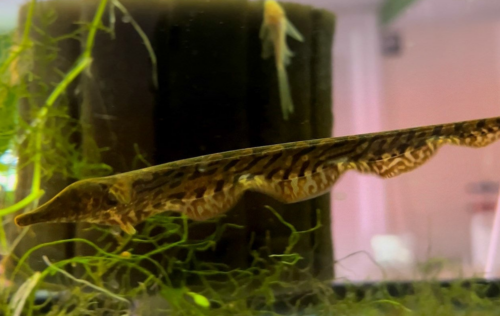
Trumpet Knife Fish is one of my favorite unique and fascinating species to add to your aquarium
When it comes to aquarium requirements I would recommend a bare minimum of 75 gallons of water. Like most tropical fish from the area, they prefer soft, acidic water with a pH range of 6.5 to 7.5, and a temperature range of 75 to 80 degrees Fahrenheit. They do require plenty of hiding spots, such as caves or large pieces of driftwood, and a soft sandy substrate as they like to burrow. Lastly I believe it is essential to keep the water well-filtered as they seem to produce a lot of waste in my experience.
Overall, the Trumpet Knife Fish is one of my favorite unique and fascinating species to add to your aquarium. With their unusual trumpet-like snout, ability to generate and receive electrical discharges, and peaceful behavior, they make an exciting addition to any community tank. With adequate space, hiding spots, and the right water conditions, you can enjoy these fascinating fish for over 15 years in your aquarium!
Questions, comments or requests? Send them to: PicKFishPets@gmail.com


