
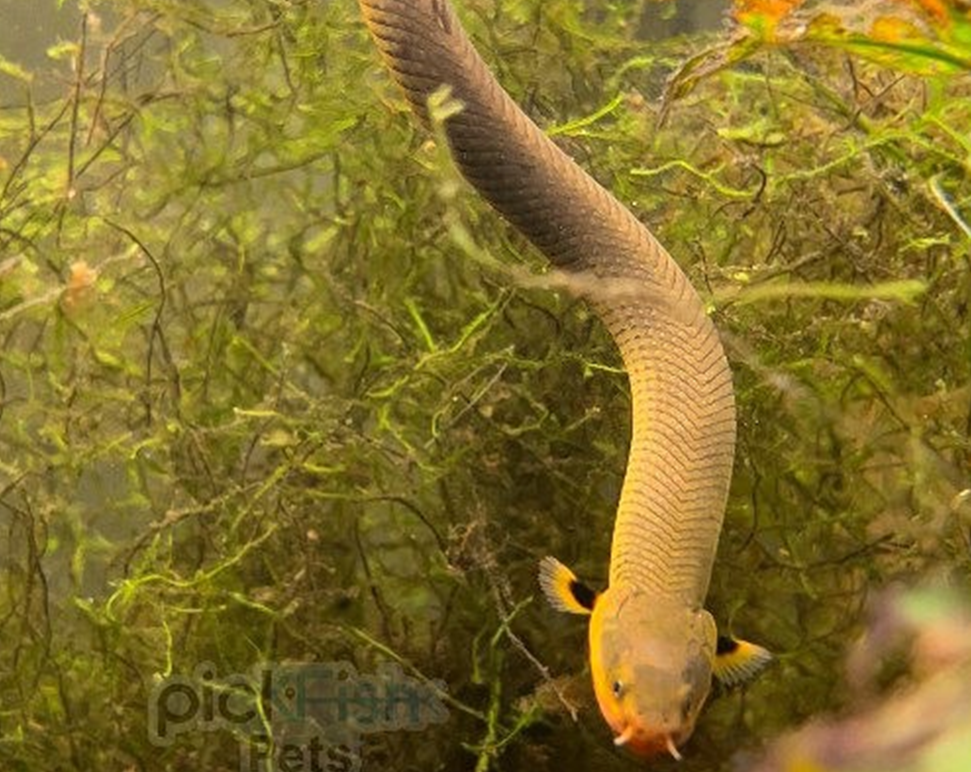
Hey everyone! I wanted to try to share something new with you all this month so I am starting a new section — a monthly showcase I’m calling “The Quick Catch.” This is just a humble attempt to share a little basic information about a fish in the hobby that I really enjoy. I’ll be drawing from my own experiences with these fish and sharing what I’ve learned (and still remember) along the way. I hope this information will be useful to you, and perhaps inspire you to learn more about these amazing creatures than just what I share. With most submissions I will share a QR code which will take you to a video I have also created. I welcome your feedback and thoughts, experiences and ideas, and look forward to seeing where this journey takes us. So, let’s give it a shot!
I am going to start things off with a unique creature of the water that has been known to give those with Ophidiophobia (an extreme fear of snakes) the heebie-jeebies — none other than the African Ropefish, Erpetoichthys calabaricus. This fish is also known as the reed-fish and the snakefish, and for good reason! It really looks like a snake stalking through your aquarium. So if you’re looking for a unique addition to your aquarium, look no further than the African Ropefish.
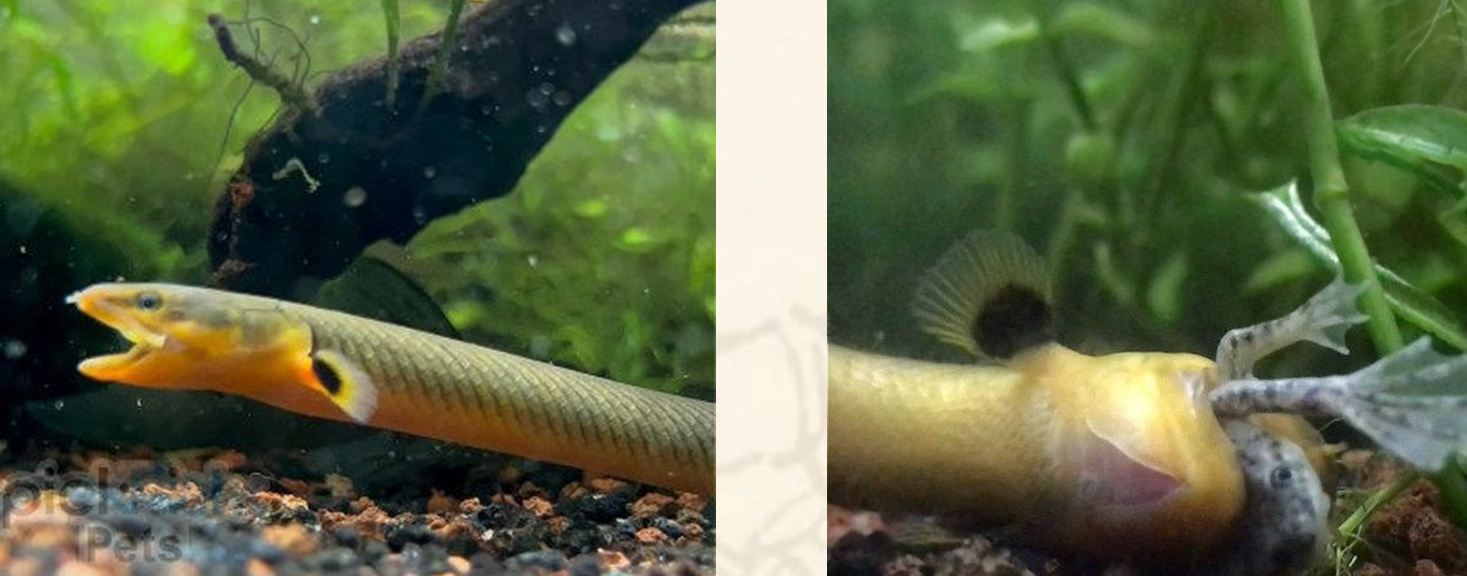
As you can see here, the ropefish’s mouth can open to a pretty large size compared to its body giving them the ability to eat small fish in a community aquarium and here you have one choking down a dwarf frog.
Native to slow-moving but heavily vegetated areas in Western and Central Africa, African Ropefish can reach sizes of up to 2 feet long and can live for 15 to 20 years in captivity. Their unique appearance — in my opinion resembling an anaconda-like snake — makes them a standout addition to any aquarium.
Despite their carnivorous nature, African Ropefish can make great additions to most community aquariums due to their peaceful behavior and activity levels. In the wild, they feed on insects, crustaceans, and smaller fish, but in captivity, they will generally accept frozen food, live worms, and sinking pellets. But it’s important to keep in mind that anything that can fit in the Ropefish’s mouth will be considered food, so it’s recommended to choose tank mates that are too big to swallow as a general rule of thumb.
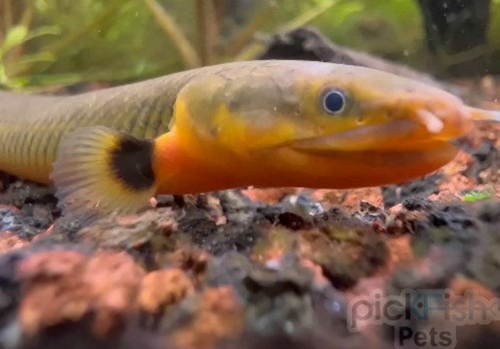
African Ropefish can also survive quite a few hours out of water due to a modified swim bladder that can act like a pair of lungs, allowing them to take oxygen from the water through their gills and from the air through their lungs. This evolutionary adaptation developed so the species could survive in stagnant waterways with low oxygenation — but it also means African Ropefish are incredible escape artists. It’s strongly suggested to keep them in an aquarium with a tight-fitting lid. I have had them escape plenty of times, but luckily I’ve never lost one that way.
While African Ropefish can do well on their own, they also thrive in small groups, so don’t be afraid to add multiple to your aquarium. I would recommend a tank size of at least 40 gallons, if not 75, especially if you are looking to keep multiple together. They do best with soft substrates so they don’t scratch their undersides. They don’t eat plants and thrive in a nicely planted aquarium with caves and overhangs. I have kept them successfully with many community fish including most tetra species, angelfish, clown loaches, rainbows, geophagus, and many others. I’ve even kept them in aquariums as warm as 84°F with discus fish with no issues. They really are an easy-to-care-for, interesting fish with a lot of personality!
Definitely one of my favorites in the hobby for sure! What about you?
As always, submit any questions, comments or requests to: PicKFishPets@gmail.com


