

Among the many fish I’ve kept and bred over the years, the Super Red Ancistrus Bushynose Pleco has been one of the most profitable fish I’ve ever bred. Their vibrant red-orange coloration is stunning in conjunction with their practical benefits as algae eaters, which make them a standout addition to any freshwater aquarium.
I first came across these plecos while browsing a local fish store many years ago, and their striking appearance immediately caught my eye. Having kept standard Bushynose Plecos before, I was intrigued by this vivid variant. Without much hesitation, I brought home a small group of 6 juveniles, eager to see how they would develop.
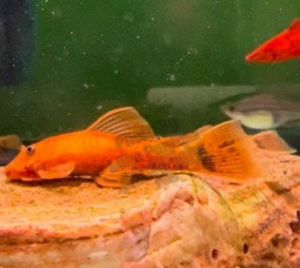
A sub-adult Super Red Pleco grazing on a rock.
Setting up their habitat was straightforward. These plecos thrive in well-oxygenated water with plenty of hiding spaces, so I provided driftwood, caves, and smooth rocks in a 40-gallon breeder tank. The driftwood wasn’t just for decoration — it is important to note that like other algae-eating plecos, Ancistrus species benefit from grazing on it, aiding in their digestion process. I also used a mix of sand and fine gravel to encourage natural foraging behaviors, and added hardy plants like Anubias and Java Fern, which are known for tolerating the plecos’ occasional rasping without much damage.
Water parameters play a crucial role in their health and growth. I maintained a temperature between 78–82°F and a pH range of 6.6–7.2. Keeping the water clean with regular water changes and good filtration was essential, as plecos are known for their substantial waste output.
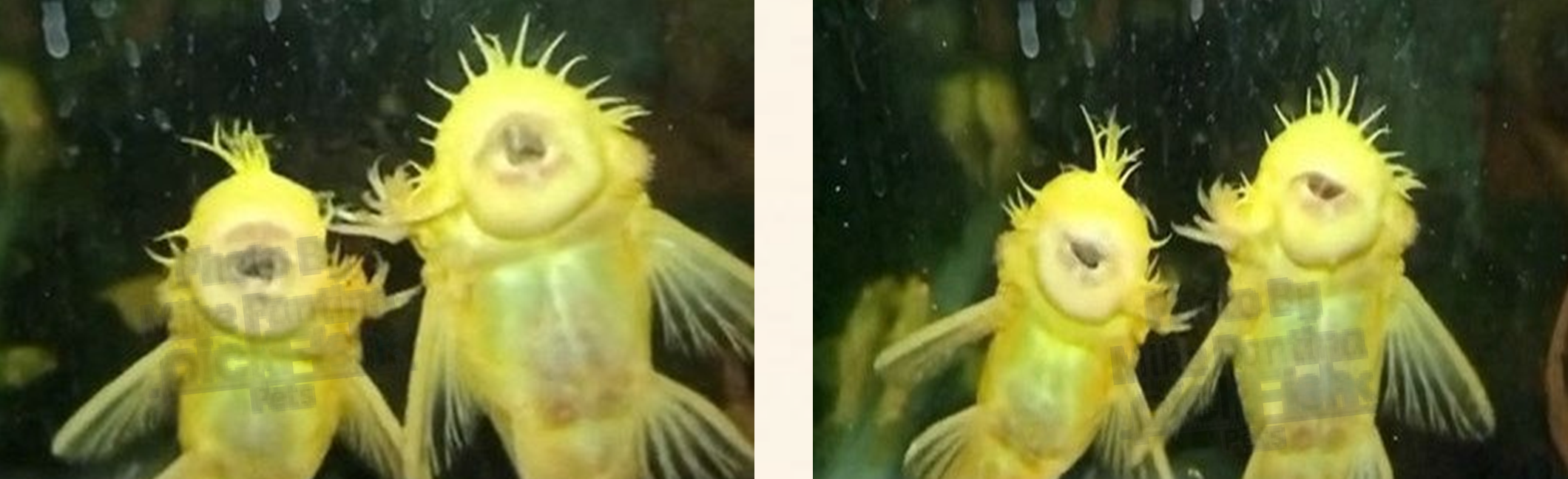
Two male bristlenose plecos “punching” each other. You can see the ondontodes extending out from the cheek.
Feeding time quickly became a highlight. Super Red Ancistrus are omnivores, and while they naturally graze on algae, they need a balanced diet. I fed them high-quality algae wafers, blanched vegetables like zucchini and cucumber, and occasional protein sources such as bloodworms, blackworms, and staple wafers. They are very enthusiastic eaters, and their constant grazing kept algae levels in check — a bonus for any aquarium.
As my plecos matured, I noticed distinct behavioral traits. They were generally peaceful but could be territorial, especially among males when claiming hiding spots. This territorial behavior became even more pronounced during breeding. Sometimes males would fight and “punch” each other — unlike typical fish that will nip or chase, male Ancistrus will use their heads and snouts to shove and ram into each other. They also have side cheek odontodes that they can thrust with, which looks like they are throwing a punch. Most aggression takes place when males are protecting caves and looking to breed.
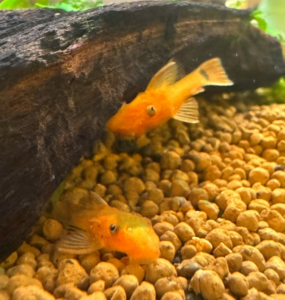
Two juvenile Super Reds in their grow-out tank.
Breeding these plecos is both fascinating and rewarding. Males took the lead, selecting and cleaning out a cave where the female would lay her eggs. After fertilization, the male would guard the eggs, fanning them diligently until they hatched. About a week later, tiny fry emerged, clinging to surfaces and feeding on biofilm. Ensuring an ample food supply and plenty of hiding spots helped improve their survival rate. I would try to remove them after 2–3 weeks to grow them out in a separate tank so I didn’t have to worry about competition for food or predation. Watching them grow from tiny fry to vibrantly colored juveniles was a satisfying process. While fry can take 8 to 12 months to reach adulthood, most plecos will reach 1.5 inches in about 3 months, which is a good sellable size.
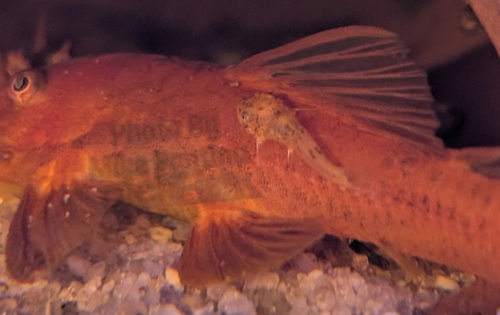
Baby Super Red hanging out on it’s fathers back.
Overall, keeping and breeding Super Red Ancistrus Bushynose Plecos has been a great experience. They are hardy, visually striking, and beneficial to an aquarium ecosystem — plus they breed easily. If you’re considering adding them to your tank, I’d highly recommend them. Just be prepared for their constant grazing and occasional territorial disputes, and you’ll find them to be an excellent addition to a well-maintained setup.
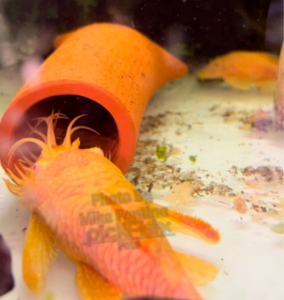
Male Super Red guarding his cave.
As always, submit any questions, comments or requests to: PicKFishPets@gmail.com


