QUICK CARE
TEMPERATURE
75 – 80°F
MAX SIZE
3.5 - 4 inches
TEMPERAMENT
Semi-Aggressive
PH
6.5 - 7.5
MIN TANK
30 gallons
DIET
Carnivore
WATER HARDNESS
10 - 20 dGH
LIFESPAN
10+ Years
CARE LEVEL
Moderate
COMMON NAME
Spotted Congo Puffer
ORIGIN
Congo River Basin, D.R. Congo
TANK MATES
Fast-moving, short finned fish, robust tetras, loaches & similarly suitable species with caution
SCIENTIFIC NAME
Tetraodon schoutedeni
CONSERVATION STATUS
Data Deficient
THE QUICK CATCH | SPECIES PROFILE
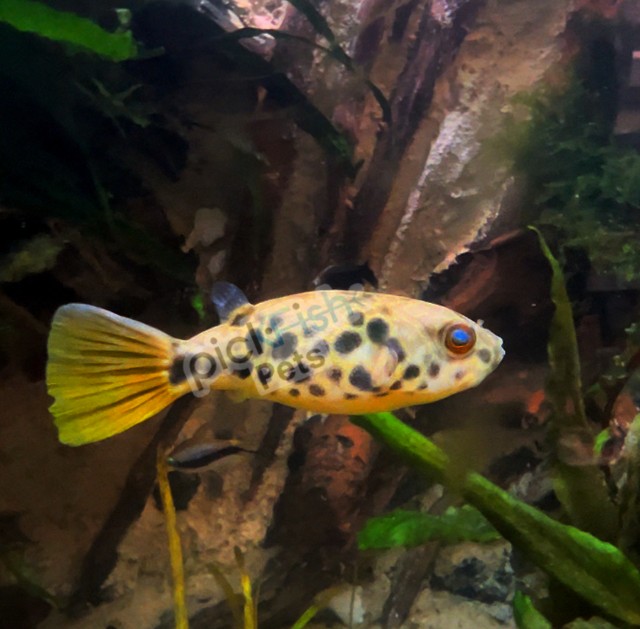
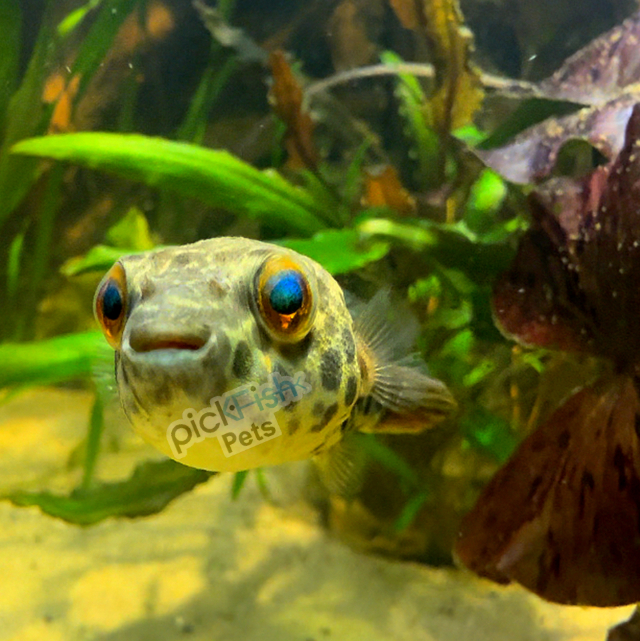
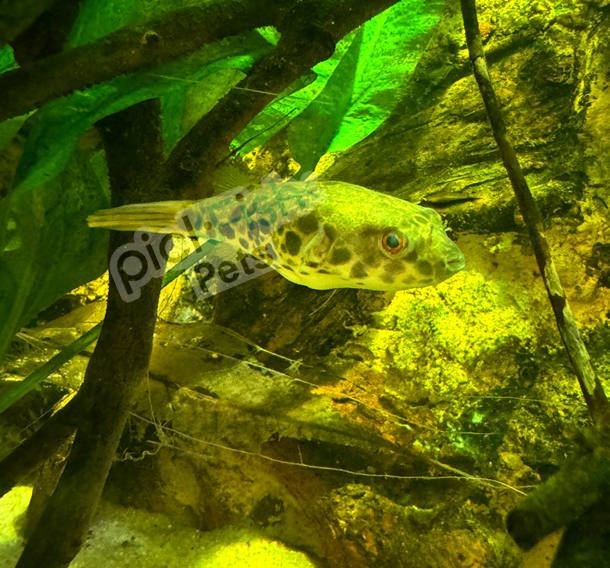
This month, I want to discuss another one of my favorite fish — which yes, happens to be another puffer fish! What is this now, 3 puffer species out of 15 articles? You might start thinking I’m obsessed. Well I gotta tell you… I am. This fish can live in excess of 10 years and only grows to a size of just under 4 inches long. It is the smallest of all the African puffer fish and is known as The Spotted Congo Puffer, or Tetraodon schoutedeni. When I first decided to keep a Spotted Congo Puffer many years ago, just like when I was researching the Fahaka Puffer, I was a little intimidated by the challenge. The books and few internet articles I read made it seem like they were a super hard fish to care for, yet I threw myself in head first anyway and was rewarded with almost 8 years of an awesome Spotted Congo Puffer community aquarium.
I recently decided to set up a display at the store with these puffers as well, so I thought it was a great time to write a little article about them!
Spotted Congo Puffers can be and are bred in captivity; yet a lot of specimens you see are actually still wild-caught. They are a true freshwater puffer native to the Congo River Basin in the Democratic Republic of the Congo, where they inhabit large river systems and associated freshwater habitats. These environments can include areas with aquatic and marginal vegetation, submerged structure, and softer substrates that provide plenty of opportunities for these constantly foraging fish to search for food. In the wild, these puffers mainly feed on insects, snails and worms, actively searching the substrate and surrounding habitat for their next meal. Mimicking this diet in captivity is important, so like always, I make sure to provide a variety of foods. Currently, the 5 I have in the main display at my store love eating live black worms, live snails, frozen bloodworms, frozen shrimp, freeze-dried krill, nightcrawlers, and insect pellets. Gut-loaded insects like dubia cockroaches also make great food for them, and occasionally I also feed Repashy foods like GrubPie. It is important to keep in mind that pufferfish have teeth fused together to form a beak-like structure — this is why crunchy foods are especially important to help keep their beaks healthy and short.
It is also important to keep in mind how much space Spotted Congo Puffers need. The 5 I am housing in the main display at the store are in a 6-foot 150-gallon aquarium. These fish can be kept alone or in groups. When kept by themselves I would recommend at least a 30-gallon aquarium. If you want to keep a group, I recommend at least 5 or 6 as this will disperse aggression throughout the tank. I recommend a minimum of 90 gallons (4′ x 18″) to house a small group, but bigger is always better! You should add a lot of plants, wood, and caves to break the line of sight and create hiding spots. I typically use a soft substrate — in the display I am using pool filter sand. The plants mostly consist of Java Fern, Anubias, Vallisneria, Lotus Lilies, and Amazon Swords, along with a rather large and stunning Pogostemon. They can and will nip plants, so keep that in mind.
Pufferfish are famous for their association with powerful neurotoxins such as tetrodotoxin, although the type and amount of toxin can vary considerably between species, populations, and even individual fish. Because the toxicity of Tetraodon schoutedeni specifically isn’t well documented, they should never be assumed to be safe for human consumption. You know what they say — give a man a fish and feed him for a day, give a man a pufferfish and feed him for a lifetime. A lifetime. ‘Cause he’s dead.
Maintaining the right water conditions has always been key to my puffers’ health. I keep the pH between 6.5 and 7.5, and while they can be maintained in the mid-70s°F, I’ve had excellent results keeping mine around 78–82°F. Medium to strong water flow works well, but it’s important not to make it too overpowering.
While Spotted Congo Puffers are among the more peaceful and social freshwater puffers kept in aquariums, they can still become aggressive with each other and other fish. For this reason it is best to keep fast-moving fish with shorter fins. My puffers are currently kept with Congo Tetras, Alestes Tetra, Phantom Tetra, Clown Loaches, an Imperial Flower Loach, and some Panda Garra. Every now and then a fish can get nipped or even eaten — however, I also successfully and steadily breed Palmeri Tetra in there as well, and they flourish. So I would say house them with other fish but keep a close eye on aggression.
Keeping Spotted Congo Puffers has definitely been, and continues to be, a lot of fun. These fish are truly remarkable and entertaining and have a personality all their own. If you’re up for the challenge and committed to meeting their needs — especially dietary — these puffers can be a fun and interesting addition to your aquarium. Side note: do you know why pufferfish are so expensive? Inflation.
As always, submit any questions, comments or requests to: PicKFishPets@gmail.com