
QUICK CARE
TEMPERATURE
79 – 85°F
MAX SIZE
12 - 14 inches
TEMPERAMENT
Aggressive / Predatory
PH
5.5 - 7.0
MIN TANK
150 gallons
DIET
Carnivore / Piscivore
WATER HARDNESS
2 - 10 dGH
LIFESPAN
10+ Years
CARE LEVEL
Advanced
COMMON NAME
Zebrina Pike Cichlid
ORIGIN
Ventuari River, Venezuela
TANK MATES
Large cichlids, large characins, armored catfish & other robust fish too large to be swallowed
SCIENTIFIC NAME
Crenicichla zebrina
CONSERVATION STATUS
Data Deficient
THE QUICK CATCH | SPECIES PROFILE
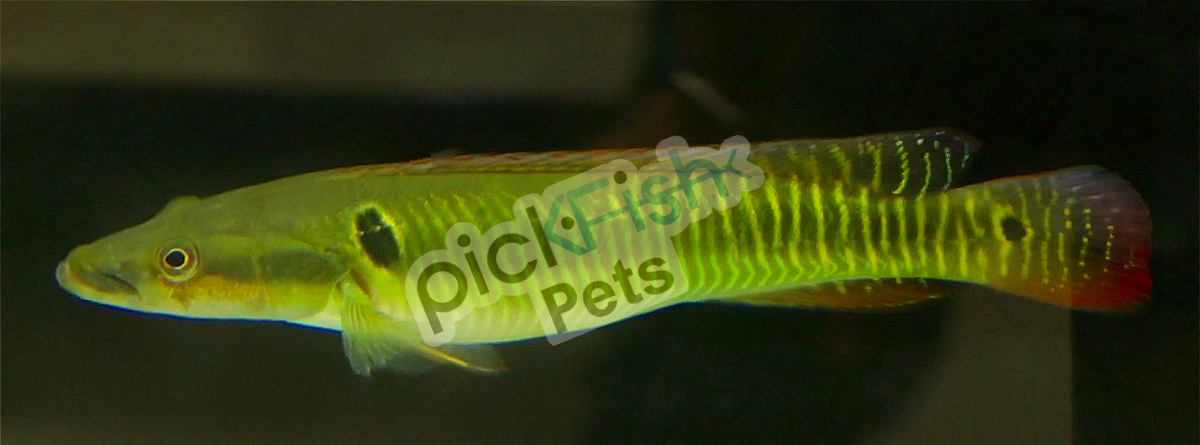
The Zebrina Pike Cichlid is a truly stunning fish! It is not only my favorite pike cichlid, but also one of my favorite cichlids. Actually, it just may even be my favorite cichlid that I’ve ever kept altogether! So, let’s dive into a little bit of info that I know about Crenicichla zebrina. It has become more popular in recent years not only due to its appearance — an elongated olive green body adorned with beautiful yellow zebra-like stripes with a bright red throat and fins to boot — because it is considered one of the more peaceful and tolerant large pike cichlids in the aquarium hobby. It was only recently discovered in 2008, but unsurprisingly, it made its way into the hobby just a few short years later and has now become a popular choice for many large tank aquarists.
Now, while I state that this pike is the most peaceful pike found so far, it is important to note that this fish is still a predator and its temperament is still considered aggressive. Lastly, it’s still a pike — and a pike is a carnivore (mainly a piscivore). That being said, I currently have one about 6–7 inches in a 40 breeder which is being housed with a pair of Aequidens patricki that I gave up trying to breed, a few super red bushynose plecos, and an albino arowana. This pike typically grows up to 12–14 inches in captivity, and thus should be kept in a minimum of a 150-gallon tank if not larger. I have a 210-gallon tank I will be moving mine into eventually. The general rule of thumb that has seemed to work for me so far, both at home and at the store, is “it can be kept with other fish, as long as it doesn’t fit in their mouth.” I’ve kept them with large cichlids and smaller community fish alike with no issues. I’ve even housed them together and for the most part had no issues there either.
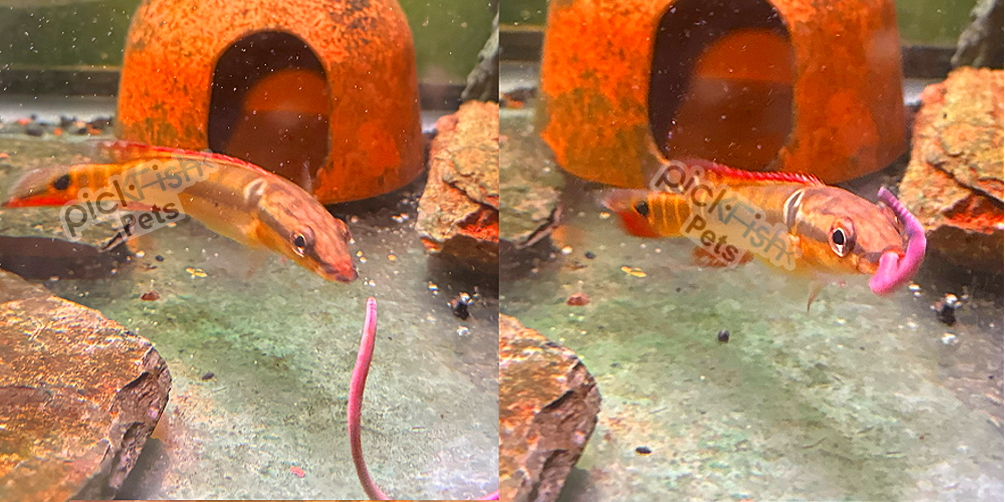
Feeding these pikes is pretty easy. While they mainly eat other small fish in the wild, in captivity I’ve been able to always get them eating pretty much everything: live black worms, live red wigglers and earthworms, mealworms, freeze-dried crickets, frozen tilapia, floating food sticks, sinking carnivore pellets, slow sinking cichlid pellets, and freeze-dried krill, just to name a few.
To my knowledge, successful captive breeding of the Zebrina Pike remains extremely rare or undocumented in the aquarium hobby, with specimens historically entering the trade as wild-caught fish. One of the biggest challenges is determining their sex, as there is no obvious external sexual dimorphism. Reliable sexing may require methods such as ultrasound or examination of the reproductive organs. I remember reading an article years ago about a German importer who even had his fish examined by ultrasound in an attempt to establish compatible breeding pairs, but despite those efforts, he was still unsuccessful in breeding them.
They come from densely vegetated, clean, warm, fast-flowing waters of the Ventuari River in the upper Orinoco River basin of Venezuela. These waters not only have a lot of plants but also rocks, crevices, and plenty of places to hide. Therefore, it is recommended to provide good water movement in the aquarium, with temperatures around 79–85°F.
So if large, beautiful, and colorful cichlids are your thing, you can’t go wrong with this truly remarkable fish. Its stunning appearance and tolerant, mostly peaceful nature make it a one-of-a-kind pike cichlid that quickly becomes the centerpiece of any large tank.
As always, submit any questions, comments or requests to: PicKFishPets@gmail.com