
QUICK CARE
TEMPERATURE
72 – 81°F
MAX SIZE
~3 inches
TEMPERAMENT
Peaceful / Social
PH
6.5 - 7.5
MIN TANK
20 gallons
DIET
Omnivore / Aufwuchs Grazer
WATER HARDNESS
5 - 15 dGH
LIFESPAN
5 - 8 years
CARE LEVEL
Easy / Moderate
COMMON NAME
Panda Garra / Rainbow Garra
ORIGIN
Rakhine Yoma, Myanmar
TANK MATES
Tetras, rasboras, barbs, rainbowfish, loaches & other peaceful community fish
SCIENTIFIC NAME
Garra flavatra
CONSERVATION STATUS
Vulnerable
THE QUICK CATCH | SPECIES PROFILE
The Panda Garra, also known as the Rainbow Garra and scientifically known as Garra flavatra, was only discovered in 1998. They were found in the Arakan (or Rakhine) Mountain range in the Rakhine State of western Myanmar (Burma). The species is currently listed as Vulnerable by the IUCN, making its widespread captive breeding and success within the aquarium hobby especially noteworthy. This is one of my all-time favorite fish in the hobby! Ever! Ever, ever! I’m clearly not the only one who feels this way either. Want to know how I know that? While it was only discovered in 1998 and wasn’t formally described until 2004, it has been present in the hobby since 2005. Not only that, but fish farms have been commercially breeding them since 2008! Here we are now, and they are an ever-present staple — one of the best and most sought-after algae eaters in the hobby today!
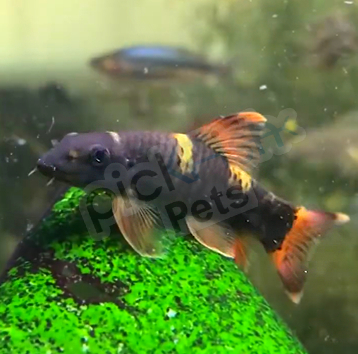
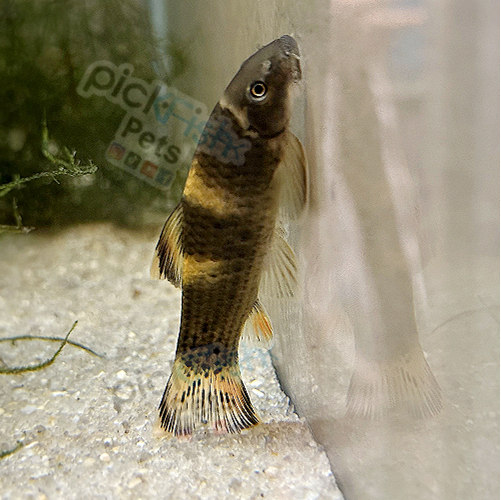
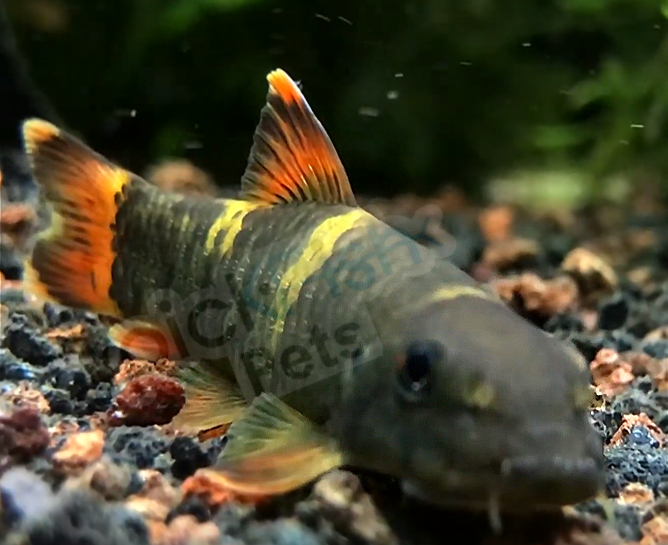
A peaceful community fish that can be kept by itself or in groups, they are truly one of the best-looking and most active algae-eating community fish. They have a black base body with vibrant yellow striping that not only helps them camouflage in the wild but also draws attention in your home aquarium. This black and yellow thick-striped body is accompanied by bright, vivid red fins all over its body. The Panda Garra’s underside is completely flat, with its sucker-like mouth located at the front of its body, making it well-suited to rest on smooth surfaces while scraping algae and biofilm. They make great and peaceful, yet stunning, alternatives to plecos and otocinclus catfish. Just make sure you have a nice cover on your aquarium as these fish are known to be jumpers.
While they mainly feast on biofilm and algae, they are omnivorous and need to be fed other foods as well. Algae wafers, staple wafers, shrimp pellets, bloodworms, brine shrimp, blackworms, and even flakes are all readily accepted — they are not picky eaters. They will even eat black beard algae! I’ve seen Panda Garras consistently graze on BBA in both my personal aquariums and tanks at the store, although like most algae eaters, individual fish can vary in what they choose to eat. This makes them an alternative to Siamese algae eaters, Amano shrimp, and nerite snails as a hair algae cleanup crew.
Panda Garras typically reach around 3 inches in length and will mainly hang out on the bottom of the tank, on the glass, on wood, or on plant leaves, cruising for biofilm and algae to nibble on 24/7. They do well in temps as low as 72°F and can be kept in warmer waters too — I’ve kept them in my discus tanks at around 84°F with no issues whatsoever.
As you can see, the Panda Garra is a versatile and attractive addition to any freshwater aquarium. Their peaceful nature, combined with their efficient algae-eating habits and striking appearance, make them a favorite among aquarists. Whether you are a seasoned hobbyist or a newcomer, the Panda Garra can bring both beauty and utility to your tank. If you’re looking for a reliable and eye-catching algae eater, the Panda Garra is an excellent choice.
As always, submit any questions, comments or requests to: PicKFishPets@gmail.com