QUICK CARE
TEMPERATURE
75 – 82°F
MAX SIZE
2"
TEMPERAMENT
Peaceful
PH
5.0 – 7.6
MIN TANK
15 gallons
DIET
Omnivore / Micropredator
WATER HARDNESS
3 - 12 dGH
LIFESPAN
5+ years
CARE LEVEL
Easy
COMMON NAME
Cardinal Tetra
ORIGIN
Upper Orinoco & Rio Negro Basins
TANK MATES
Peaceful community fish
SCIENTIFIC NAME
Paracheirodon axelrodi
CONSERVATION STATUS
Least Concern
THE QUICK CATCH | SPECIES PROFILE
Even though I have had the pleasure of housing the vibrant Cardinal Tetra (Paracheirodon axelrodi) in my aquariums many times, I still find myself captivated by the enchanting beauty this species brings to this very day.
Native to the Orinoco River Basin in Colombia and Venezuela, as well as the Rio Negro Basin in Brazil, these fish have been cherished staples of my underwater communities since I was a young child.
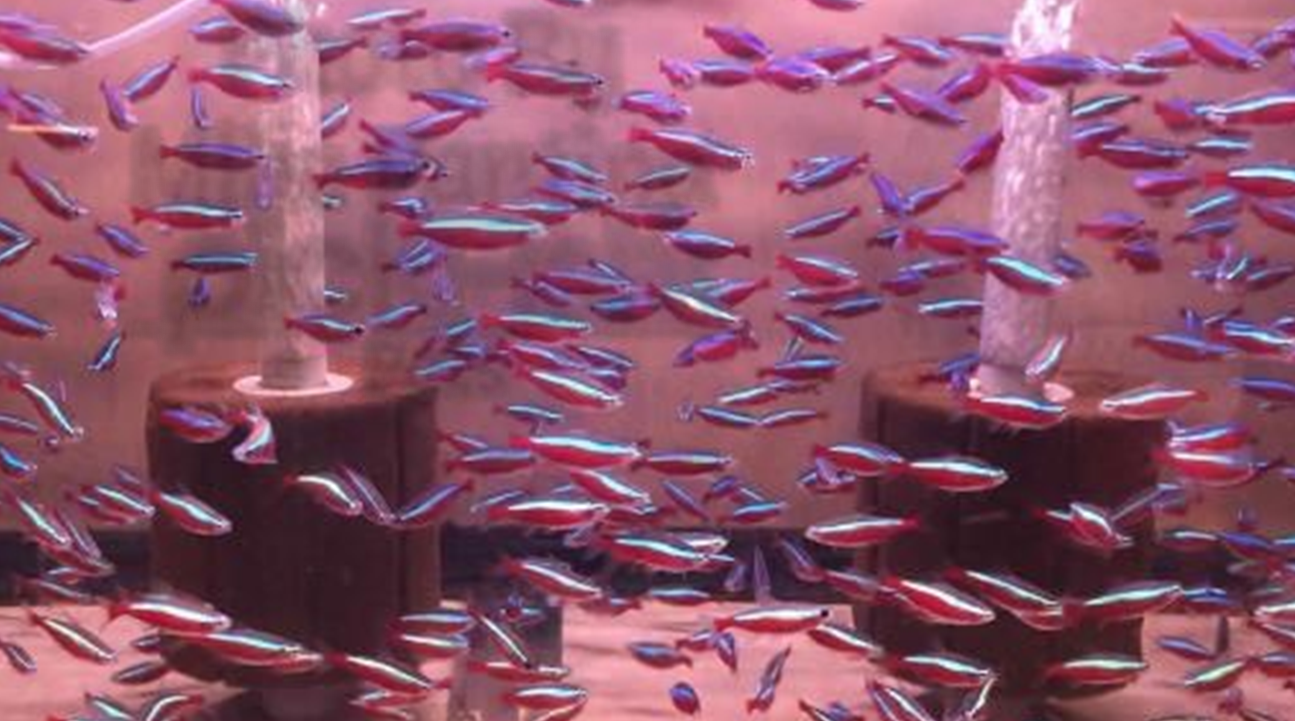
The Cardinal Tetra, known for its peaceful nature, thrives best in groups of six or more. Personally, I strongly recommend keeping them in even larger numbers when possible. Observing these groups in action is truly mesmerizing; their synchronized movements create a captivating display of vibrant shimmer and color as they gracefully traverse the aquarium. I’ve kept dozens of them together in densely planted aquariums and have watched countless people become captivated as these fish dance through the tank.
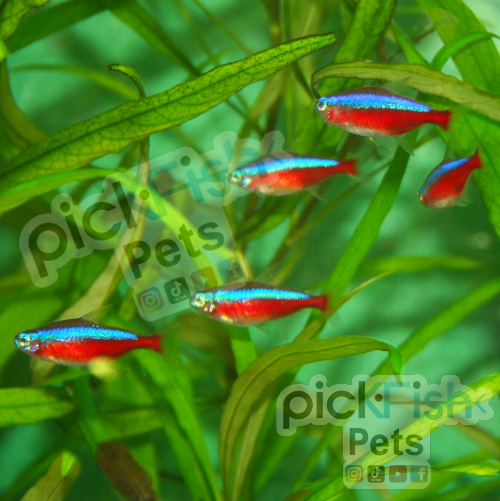
Typically reaching a size of up to 2 inches, the captive-bred Cardinals in my care tend to be a bit larger and more vibrant than their wild counterparts. Their distinctive features include two striking stripes of bright colors, with red dominating the lower half and a thinner, reflective blue streaking through the eye and along the top of the body, meeting with the red down the middle. It’s important to note that unlike the Neon Tetra — a species often confused with the Cardinal Tetra — the red coloring of the Cardinal extends seamlessly throughout its entire body and doesn’t stop at the fish’s stomach.
In terms of diet, Cardinal Tetras prove to be versatile omnivores. While they do showcase micropredator tendencies in the wild — indulging in insect larvae, worms, and tiny organisms — in the aquarium, they thrive on a balanced diet consisting of flakes, frozen bloodworms, brine shrimp, daphnia, and live or freeze-dried tubifex and black worms. Maintaining this diverse menu contributes not only to their overall health but also intensifies the vibrancy of their colors.
For me, breeding them has introduced a unique challenge. Having attempted to encourage breeding a few times, I’ve always faced the common hurdle of adult Cardinals consuming their eggs before I could separate them. Successful breeding usually requires soft, acidic water and very subdued lighting, with the parents removed shortly after spawning to prevent them from eating the eggs. The eggs and newly hatched fry are also particularly sensitive to light, adding another challenge to breeding this species successfully.
In adhering to the basics of Cardinal Tetra care that have been cemented for decades, I’ve found them to be shy and peaceful shoaling community fish, favoring the mid to top range of the tank. Maintaining a temperature range of 76°F to 84°F, coupled with proper care and maintenance, has made these captivating fish a fairly easy and rewarding addition to many of my aquariums throughout my life. Their elegance, vibrant colors, and unique behaviors have added a dynamic dimension to my underwater worlds for a long time and will continue to do so — as I’m sure it does for many of you as well!
As always, submit any questions, comments or requests to: PicKFishPets@gmail.com