QUICK CARE
TEMPERATURE
75 – 82°F
MAX SIZE
7 inches
TEMPERAMENT
Peaceful / Semi-Aggressive when breeding
PH
6.5 – 7.5
MIN TANK
40 gallons
DIET
Omnivore
WATER HARDNESS
5 – 15 dGH
LIFESPAN
10+ years
CARE LEVEL
Easy
COMMON NAME
Electric Blue Acara
ORIGIN
Captive-developed
TANK MATES
Peaceful to semi-aggressive medium-sized fish
SCIENTIFIC NAME
Andinoacara sp. “Electric Blue”
CONSERVATION STATUS
Not Applicable
THE QUICK CATCH | SPECIES PROFILE
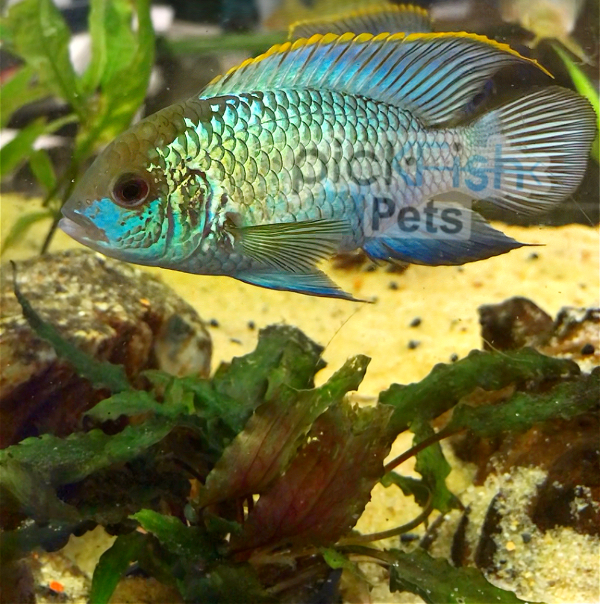
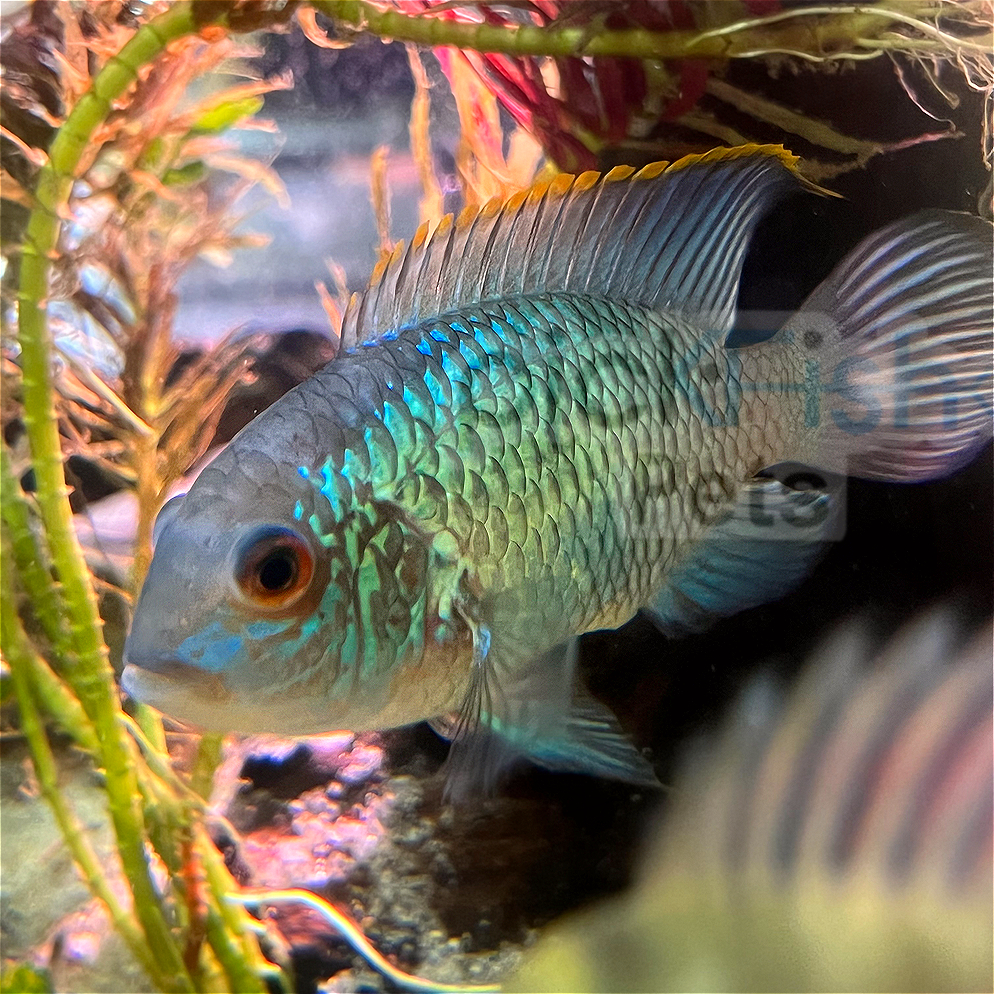
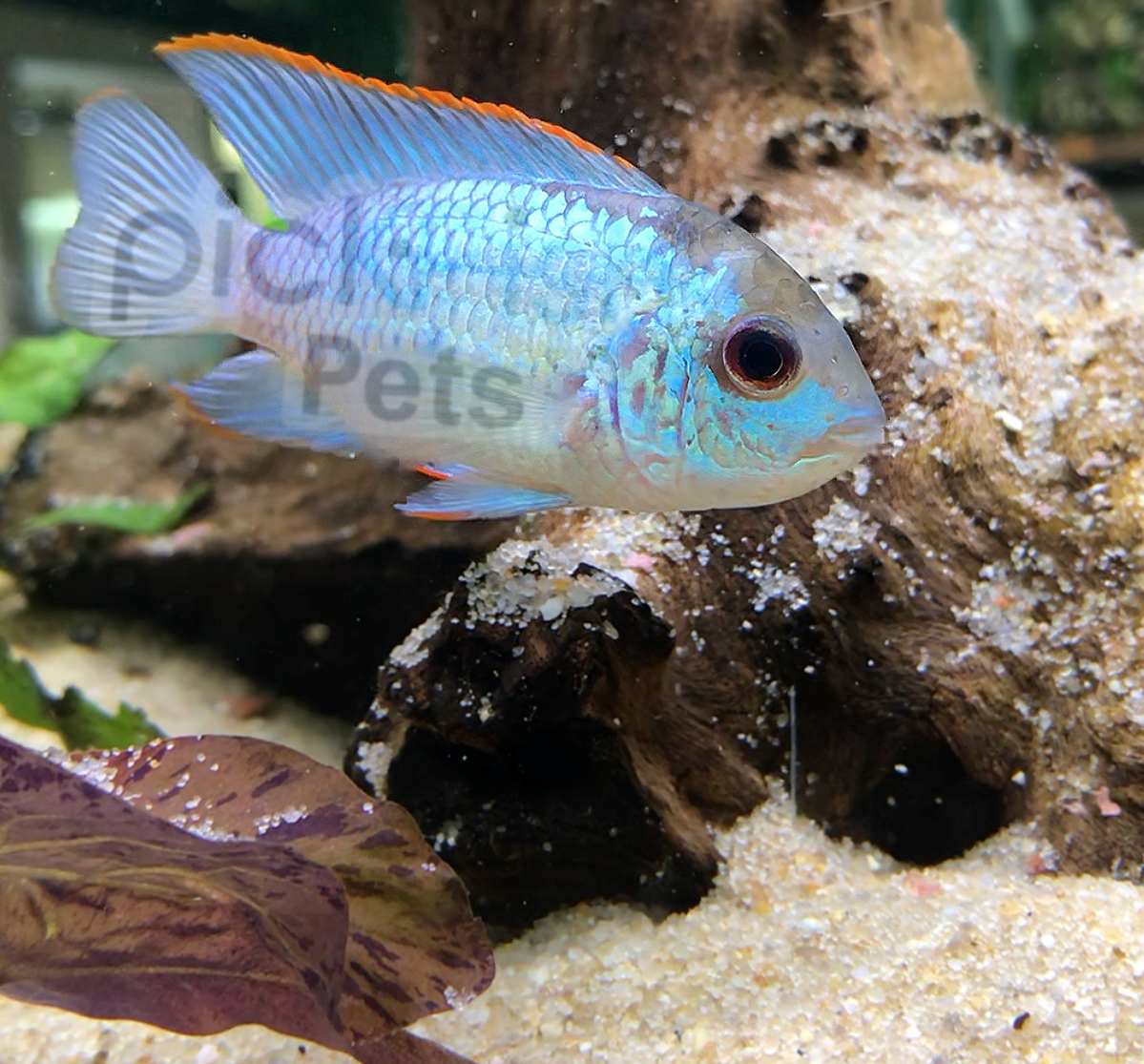
The Electric Blue Acara is a striking captive-developed form associated with the Blue Acara, Andinoacara pulcher (formerly Aequidens pulcher). Its exact origins remain somewhat debated, with the fish variously described as a selectively bred color form or a hybrid developed from Blue Acara lineage. What we do know is that the Electric Blue Acara was developed in captivity and this brilliant electric-blue form is not found naturally in the wild. Its striking body showcases a spectrum of blue hues, often garnished with a captivating gold or yellow shimmer that becomes even more pronounced when illuminated by appropriate aquarium lighting. With its distinct orange-red eyes, large black pupils, and a vibrant orange strip along the dorsal fin, the Electric Blue Acara effortlessly captivates any observer. Moreover, its peaceful nature and easy care requirements make it a very popular choice among aquarium hobbyists.
To properly house Electric Blue Acaras, I would recommend providing them with a medium to large-sized planted aquarium. For a pair of EBAs, a minimum tank capacity of 40 gallons is what I would recommend, with an additional 15 gallons per additional EBA after that. These fish possess a penchant for digging, so a soft, non-abrasive substrate such as fine sand is ideal. They not only appreciate the presence of plants but also caves and hiding spaces created by driftwood and plants for exploration and shelter.
Characterized by a short and stocky build, the Electric Blue Acara can grow to sizes of up to 7 inches, although most individuals typically reach between 5 and 6 inches. Males tend to be longer and slimmer compared to their female counterparts, and males have longer and more pointed dorsal and anal fins. The dorsal fin on my male trails back past the end of his tail.
Electric Blue Acaras can also be surprisingly long-lived. While exact maximum lifespans aren’t well documented, a decade or more is certainly possible under good aquarium conditions. I myself have a pair I’ve been keeping and breeding for over 7 years now, and they’re still going strong after gifting me thousands of babies already.
Another fascinating aspect of the Electric Blue Acara is the strong pair bond they can form. Once a compatible pair becomes established, they may continue spawning together repeatedly for many years, which allows for continuous breeding opportunities. Breeding usually begins with the male performing a dance to attract the female’s attention — I call it the “EBA Shimmy.” Once the pair is ready, they seek out a clean, flat surface, often a large rock, on which the female lays her eggs for the male to fertilize. On average, a female Electric Blue Acara will lay between 150 and 300 eggs, which the male promptly fertilizes.
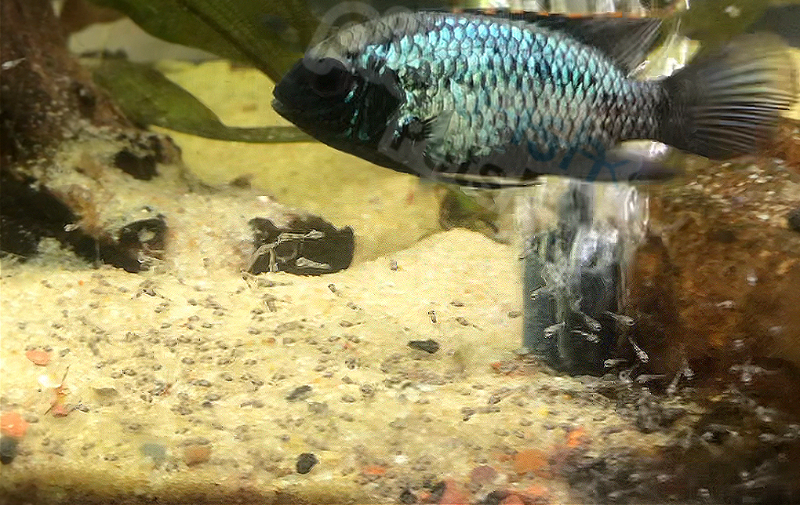
The pair exhibits commendable dedication and ferocity in protecting their precious clutch of eggs. For the next 48 to 72 hours, the male and female take turns guarding the eggs. After this period, the eggs begin to hatch, and the parents shift their focus to safeguarding the newly emerged fry. This protective behavior continues for an additional 3 to 4 days until the fry develop into free-swimming juveniles. Still, for about 2 more weeks, the parents diligently provide food and protection for their offspring, making them relatively easy cichlids to breed and raise once a compatible pair is established.
As always, submit any questions, comments or requests to: PicKFishPets@gmail.com